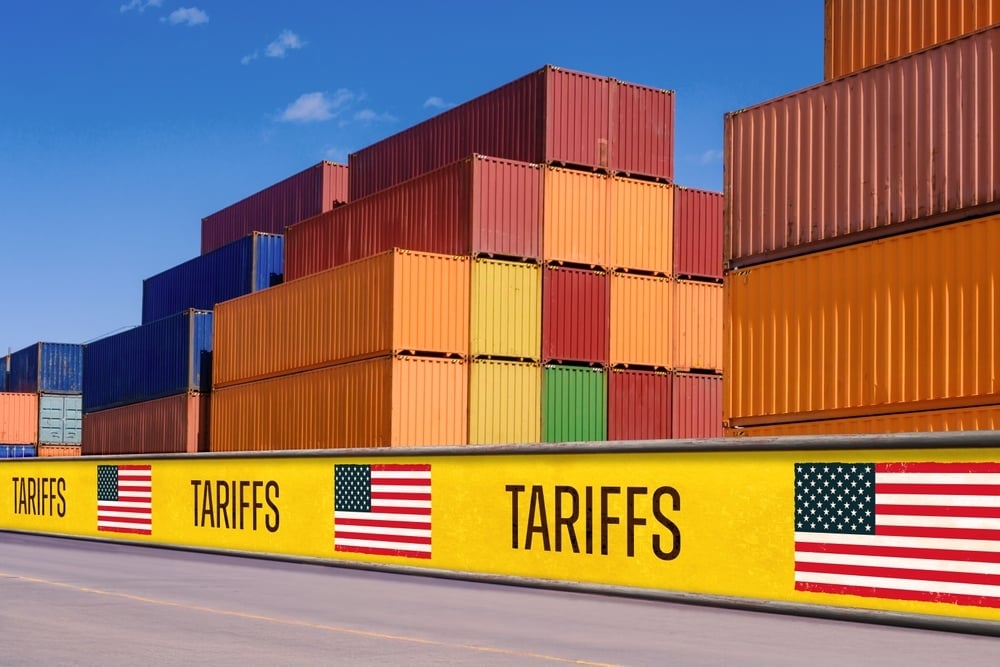
Court rulings, executive actions, shifting percentages, and administrative bottlenecks caused by the tariff situation are creating real operational and financial consequences for importers across industries.

Court rulings, executive actions, shifting percentages, and administrative bottlenecks caused by the tariff situation are creating real operational and financial consequences for importers across industries.
International shipment delays are rarely caused by one single point of failure. They can be the result of documentation errors, regulatory miscues, geopolitical shifts, extreme weather, capacity constraints, or simple miscommunication across too many handoffs.
You can ship lithium batteries – and the equipment containing them – in an ocean container, but the restrictions are getting tighter. So how do you know when you can ship lithium batteries in an ocean container?
From toothbrushes to Teslas, lithium batteries power countless items that support everyday life. The lithium-ion battery market was valued at $87.1 billion in 2025, according to Future Market Insights, and is projected to reach $377.6billion by 2035, a CAGR of 15.8%.
When you bring goods into the U.S., of course you expect to pay for transportation. But as you plan an import, remember that it also costs money to clear the cargo through U.S. Customs, even when the product isn’t subject to any duties. So you need to understand the elements that make up U.S. Customs import fees, and when they’re required.
When you’re a smaller-volume shipper importing or exporting container freight between the U.S. and Europe, the lure of working with a major freight forwarder or Non-Vessel-Operating Common Carrier (NVOCC) can be strong. At that level, they have significant leverage with the major ocean lines and can offer attractive rates for each booking. But is it possible that going the “big guy” route can prove to be penny wise yet pound foolish? What are the best types of shipping companies for small businesses? Let’s take a look under the hood.
For anyone importing goods into the U.S., there are two main types of companies providing services to help you bring them in: Freight forwarders and customs brokers. Forwarders focus on the cargo transport, from origin to destination, whereas customs brokers focus on efficient, compliant clearance of your imports through customs. While there may be some overlap in duties, the roles of brokers and forwarders are more complementary.
Whether you’ve been importing goods to the U.S. for years, or just setting up shop, contending with clearing freight into the country through Customs and Border Protection (CBP) is a complex affair. Everything needs to be buttoned up tight in order to avoid unnecessary delays and snafus.
An Importer of Record (IOR) is the party to a transaction responsible for ensuring that imported goods meet the legal and regulatory requirements of Customs and Border Protection (CBP). This is hugely important because non-compliance with customs regulations carries serious consequences, including legal liability, fees and even seizure of cargo or suspension of an import license.
We end each year by sharing our most popular posts by readership of the past year. Not surprisingly, each of 2024’s top blog articles answers a question. Read on to see what others found so interesting.
If you’re involved in international trade and shipping, you need to become familiar with the HS (Harmonized System) Code for your products. Let’s unpack shipping HS Codes (also known as HS codes or commodity codes) – what they are, how they work, and why they are important. We’ll also demystify HS Codes by addressing common questions that arise, and explain how an experienced customs broker can help you navigate the complexities.
219 South St., Suite 100
New Providence, NJ 07974
Tel: 732.516.9555
Toll Free: 800.241.1423
Fax: 732.516.9777