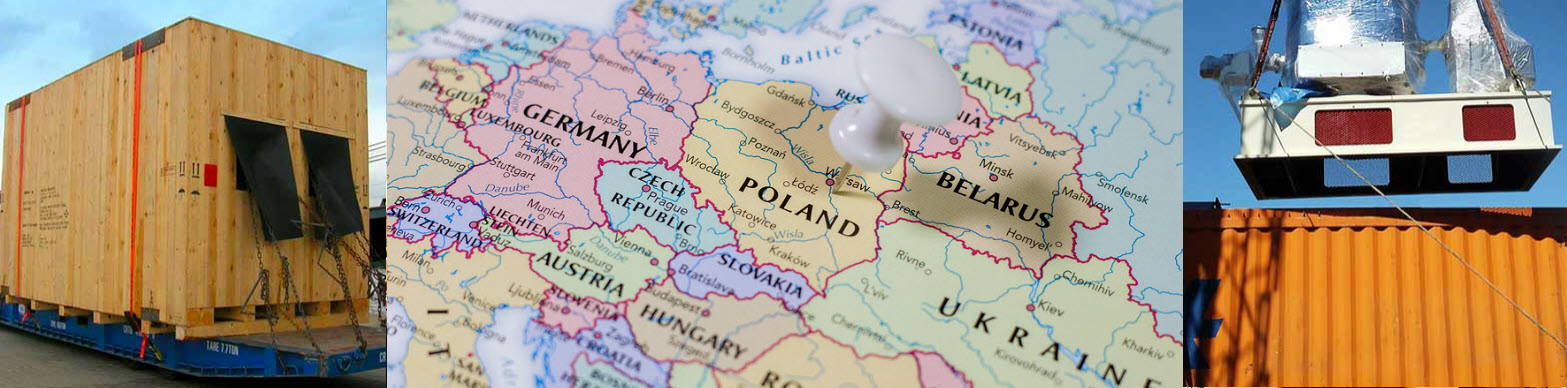
Poland has become a pivotal logistics hub in Europe, a country whose manufacturing strength, geographic position, and growing export economy have reshaped regional trade flows. Over the past decade, U.S.-Poland commercial ties have accelerated, driven by demand for industrial machinery, engineered components, advanced metals, and furniture.
Through the first eight months of 2025, U.S. exports to Poland totaled $9.4 billion, a 16.3% increase over $8.7 billion in the same period during 2024, according to the Foreign Trade Division of the U.S. Census Bureau.
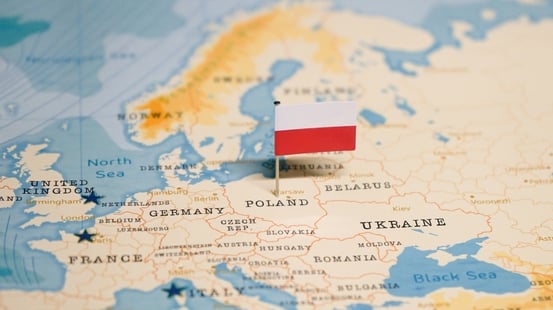 As more American manufacturers source from Polish suppliers (exports from Poland to the U.S. rose 7% in 2024 to $11.7 billion) the need for dependable freight forwarding expertise has grown along with it.
But freight forwarding in Poland is not a one-size-fits-all exercise. The country’s logistics environment carries its own complexities, from heavyweight restrictions to intricate EU documentation rules. For U.S. companies shipping to or from Poland, a freight forwarding partner that understands Poland specifically can dramatically reduce both cost and risk.
This is where I.C.E. Transport has carved out a deep specialization. For decades, I.C.E. has focused heavily on the U.S.-Poland trade lane, building a reputation for managing everything from standard container shipments to complex industrial machinery moves.
For shippers who depend on predictable transport, transparent pricing, and strong coordination on both sides of the Atlantic, finding the right freight forwarder in Poland can make all the difference.
What Makes Poland a Unique Shipping Market
Poland’s logistics significance begins with geography. Sitting at the crossroads of Central and Eastern Europe, the country acts as a strategic entry point into the EU while also serving as a staging ground for distribution into the Baltics, Scandinavia, Germany, the Czech Republic, Slovakia, and even former Soviet republics. Many global manufacturers position production or assembly operations in Poland precisely because the transport networks radiate outward with exceptional reach.
Its export sectors reflect this position. Machinery, including computers, electrical machinery and related equipment, are among Poland’s top exports, followed by plastics, furniture and bedding, iron, steel, and mineral fuels. These goods flow heavily through the Port of Gdynia and, to a lesser extent, Gdańsk. While both ports are capable and modern, Gdynia in particular faces congestion during high-volume periods. This makes local expertise essential ─ things like knowing when to route cargo through alternative terminals, when yard conditions slow operations, or which carriers have the most reliable berthing windows.
Beyond port issues, inland logistics add another layer of complexity. Poland’s trucking network is extensive, but navigating it requires familiarity with regional restrictions, toll systems, and transportation restrictions. Heavy cargo presents even more difficulty as strict axle weight rules can change route feasibility, timing, and equipment selection. And because many Polish exports skew toward machinery and industrial goods, overweight or out-of-gauge (OOG) shipments are common.
Layered onto all this is the regulatory dimension. All Polish exports move within the EU’s customs and compliance framework. But local nuances, particularly around machinery, hazardous cargo, or specialized documentation, can catch inexperienced forwarders off guard. A single error or misfiled document can stall a shipment in port, delay clearance, or trigger costly penalties.
In such an environment, working with a freight forwarder in Poland that has a deep understanding of the country’s infrastructure, customs processes, carrier behaviors, and inland transportation lessens your risk. For shippers moving cargo to or from the U.S., the forwarder’s competency on both continents becomes even more important.
Key Criteria for Selecting a Freight Forwarder in Poland
Choosing a freight forwarder in Poland is about rates, yes, but also about evaluating which partner can consistently move freight through an operationally demanding country. The right forwarder has a ground-level understanding of Polish logistics.
One key criterion: a forwarder’s local presence and trade lane specialization will determine the reliability and cost efficiency of your shipment, more than any marketing claim or bundled offering. With that in mind, here’s how you can distinguish a capable Polish freight forwarder from a generalist.
Deep Knowledge of Polish Ports and Inland Networks
A forwarder needs to know everything about port operations, potential logistics chokepoints, which inland ramps offer reliable capacity, and how to navigate complex trucking regulations. They will provide better outcomes than a partner relying solely on carrier schedules and generic routing.
Poland’s gateway port of Gdynia is a perfect example. When congestion spikes, containers can sit for days, and trucking delays ripple outward. A knowledgeable forwarder can anticipate slowdowns, work with local handlers to accelerate container availability, or route through alternative terminals when appropriate.
I.C.E. Transport’s experience in Poland is built on decades of daily operations in and out of Gdynia. Over the years, I.C.E. has developed the relationships necessary to secure competitive rates, shorter dwell times, and more reliable equipment availability. These connections also make it possible to arrange transloading or short-term storage at vetted Polish warehouses. This is an essential advantage when shipments require staging, reconfiguration, or protective handling.
Experience With U.S.–Poland Trade
Moving cargo between Poland and the U.S. involves far more than booking a sailing. Export declarations must be filed correctly, machinery or industrial loads must be crated and secured for ocean transport, and the right carriers and routings must be chosen to minimize delays at both origin and destination.
A freight forwarder in Poland that regularly handles Poland–U.S. cargo brings a different level of predictability. I.C.E. Transport’s specialization in this lane means its teams already understand the documentation requirements, routing options, and common pain points. By working with a carefully vetted network of carriers, I.C.E. provides more consistent transit times and reduces the risk of unexpected charges or last-minute capacity shortages.
Ability to Handle Non-Standard or Heavy Cargo
Poland’s export profile makes shipping heavy machinery and oversized industrial equipment a frequent occurrence. Yet not every forwarder is equipped to handle out-of-gauge (OOG) cargo that require permits and specialized equipment.
I.C.E. Transport has long been known for its project cargo capabilities. Whether it’s rigging a piece of industrial equipment at a Polish factory or securing inland trucking with specialist carriers, we handle moves that many other forwarders would decline.
For shippers in industries like manufacturing, metals, energy, or construction, this capability is especially important. A single miscalculated dimension, misloaded crate, or improperly chosen trucking route can derail a project’s timeline. A forwarder experienced with heavy cargo ensures accuracy and safety from origin to final delivery.
Transparent Pricing and No Surprise Fees
Transparency remains a persistent challenge in global shipping. Some forwarders bundle low base rates with accessorials and other charges, leaving shippers frustrated once invoices arrive.
A competent Poland-based forwarder should be able to model all likely costs upfront. This includes things like port charges, inland drayage, crating, heavy equipment permits, and any expected surcharges. I.C.E. Transport provides clarity early in the process, offering rate structures that reduce billing surprises and align expectations before cargo is even picked up. That includes proactive communication about potential bottlenecks or cost risks, such as port congestion or chassis shortages.
On-the-Ground Polish Partners and Local Support
Forwarders that operate with agents in Poland lack the visibility and control necessary to manage exceptions when they arise. The most reliable forwarding partners for freight moving to or from Poland will have direct offices in Poland, from which they maintain strong knowledge of the market and strong relationships with local transport partners.
A strong in-country partner can supervise cargo loading, step in to resolve customs questions, coordinate final-mile trucking, or manage unexpected issues at the port. I.C.E. Transport’s office in Gdynia gives shippers confidence that someone is physically present when needed, especially during inspections or high-value handling.
Offering NVOCC Services
Not all freight forwarders in Poland serving U.S. trade can issue their own bill of lading (BOL). Many rely exclusively on carrier-issued BOLs, which can limit flexibility and create added layers during claims or disputes.
As a licensed NVOCC, I.C.E. Transport holds greater control over the entire shipping process. That includes more buying power with ocean carriers, improved access to capacity during tight market periods, and the ability to handle claims directly rather than pushing them back to the carrier. For shippers, this translates into more flexible solutions and a single accountable party from start to finish.
How I.C.E. Transport Supports Polish Exporters and U.S. Importers
I.C.E. Transport’s strength in the Poland-U.S. corridor lies in its ability to manage the entire door-to-door process. From Polish factory floors to final delivery in the U.S., a single coordinated team oversees trucking, port operations, ocean carriage, customs clearance, and inland distribution. This continuity reduces handoff errors and ensures communication remains consistent.
Documentation and compliance play a major role as well. EU customs procedures, CE standards, machinery documentation, and specialized declarations for industrial cargo can become expensive points of failure if mismanaged. I.C.E.’s long experience prevents delays, prevents violations, and supports shippers through every step of the paperwork process.
Because every shipment is different, the company provides detailed pre-planning for containerized loads, heavy machinery, multi-load projects, or highly specialized equipment. This customization ensures that routing, equipment selection, and handling methods all align with the shipment’s unique requirements.
And importantly, the company’s long-term presence in Poland gives clients stability. Shippers know they’re working with a provider that has operated in this market for decades, with partners who can intervene in real time when unexpected issues arise.
Use Case: Consolidated Shipments for Polish Company
An I.C.E. Transport customer in Poland sources paints and various supplies from multiple vendors in the U.S. Since some of those vendors do not ship overseas, every few months I.C.E. arranges a consolidated shipment. Vendors ship product to Chicago or New Jersey, where it is stored on pallets in a warehouse, then loaded into a 40-foot container for shipment to Poland.
The customer simply places orders with the vendors, then contacts I.C.E.’s office in Gdynia, Poland to put the wheels in motion once they know the cargo readiness dates. I.C.E. coordinates receipt of the cargo, loading and shipment. The entire process is smooth and worry-free for the customer.
Questions Shippers Should Ask When Evaluating a Polish Forwarder
Shippers evaluating freight forwarders in the Poland–U.S. trade lane should ask:
- Do they specialize in the Poland-U.S. trade lane?
- Can they handle oversized or heavy cargo?
- Do they maintain reliable trucking partners that service Polish ports?
- Can they issue their own bill of lading as an NVOCC?
- Are their quotes fully transparent and complete?
- Do they provide true end-to-end visibility?
These questions quickly separate generalists from genuine specialists.
Choose a Freight Forwarder in Poland for Smoother, Safer Shipping
Shipping between Poland and the U.S. is too complex to entrust to providers that lack deep regional expertise. The right freight forwarder not only books transportation but also guides shippers through the complexities of ports, inland networks, documentation, and equipment decisions.
With decades of Poland-focused experience, strong carrier relationships, and hands-on local support, I.C.E. Transport stands out as a trusted partner for exporters and importers on both sides of the Atlantic. Through our partnerships, we have a global reach as well. To discuss your next shipment to or from Poland, get in touch today with I.C.E. Transport.